Unearthing the Complexities of Raw Feeding for Dogs and Cats
The landscape of pet nutrition is frequently changing, but few topics ignite as much passion and controversy as the practice of feeding dogs and cats a raw food diet. Proponents hail it as a biologically appropriate, species-specific approach that mimics the ancestral diet of wild canids and felines, promising unparalleled health benefits. Conversely, veterinary and public health organizations often issue strong warnings, citing serious risks related to bacterial contamination, nutritional imbalance, and potential public health hazards. This comprehensive exploration delves deep into the raw pet food diet controversy, examining the historical context, the arguments from both sides, the scientific evidence, and the necessary steps for pet owners considering this feeding protocol.
A Historical Perspective: The Origins of Raw Feeding
The modern raw feeding movement gained significant traction in the early 1990s, largely popularized by Australian veterinarian Dr. Ian Billinghurst. He advocated for the BARF diet, an acronym initially standing for Bones And Raw Food, later redefined as Biologically Appropriate Raw Food. Dr. Billinghurst argued that domestic pets thrive best on a diet of uncooked muscle meat, bones, organs, and raw vegetables, contrasting sharply with the highly processed, grain-laden commercial kibble that had become the staple for most pets since the mid-20th century.
The foundational principle of the BARF diet—and most raw food diets—is the belief that processed pet food, often subjected to high-temperature rendering (extrusion), destroys valuable nutrients and enzymes, and that the high carbohydrate content is unnatural for carnivores. This idea resonated with pet owners seeking a “natural” alternative, particularly as concerns about commercial pet food recalls and ingredient sourcing grew.
The Science of Nutritional Appropriateness
At the core of the debate is the fundamental question: Is a raw diet truly a nutritionally complete and balanced option for domestic dogs and cats?
Canids: Facultative vs. Obligate Carnivores
While both dogs ( Canis familiaris) and cats (Felis catus) are carnivores, there is a crucial distinction in their dietary needs that impacts the raw feeding discussion.
A. Dogs (Facultative/Scavenging Carnivores): Dogs have evolved alongside humans for thousands of years, leading to significant physiological adaptations. Key among these is the ability to digest and utilize a moderate amount of carbohydrates. This is attributed to a genetic adaptation—specifically, having more copies of the gene for amylase ($AMY2B$) than wolves—allowing them to break down starch more efficiently. While meat remains the cornerstone of their diet, their ability to thrive on a more varied intake makes them facultative carnivores.
B. Cats (Obligate Carnivores): Cats are strict or obligate carnivores. Their metabolic pathways are uniquely adapted to process nutrients exclusively from animal tissue. They have a continuous, high requirement for protein, and specific nutrient needs that must come from meat, such as the amino acid taurine and the vitamin niacin (B3), which they cannot synthesize efficiently from plant-based precursors. Their physiological inability to down-regulate certain hepatic enzymes, and their reliance on gluconeogenesis (the production of glucose from non-carbohydrate sources, mainly amino acids), underscores their absolute need for a meat-based diet.
The Nutritional Imperatives of a Raw Diet
For a raw diet to be complete, whether home-prepared or commercially formulated, it must rigorously adhere to the nutrient profiles established by global authorities, such as the Association of American Feed Control Officials (AAFCO) or the European Pet Food Industry Federation (FEDIAF). A comprehensive raw diet should contain a specific ratio of:
A. Muscle Meat (Approx. 70-80%): Provides protein, essential fatty acids, and water-soluble vitamins.
B. Edible Bone (Approx. 10-15%): Essential for calcium and phosphorus balance. The $Ca:P$ ratio is critically important, ideally ranging from $1.1:1$ to $1.4:1$. Imbalances, especially calcium deficiency, can lead to serious bone and growth deformities in puppies and kittens.
C. Organ Meat (Approx. 5-10%): A crucial source of fat-soluble vitamins (A, D, E, K) and minerals. Liver is often included, but other secreting organs like kidney and spleen are vital for trace nutrients.
D. Other Components (Vegetables, Supplements, etc.): Often included in BARF-style diets, but less emphasized in ‘Prey Model’ diets which focus solely on whole animal parts. These additions can provide fiber and antioxidants.
The Primary Concerns: Risks Highlighted by Skeptics
The most vocal critics of raw feeding—predominantly veterinary professionals, veterinary colleges, and public health organizations like the Centers for Disease Control and Prevention (CDC) and the U.S. Food and Drug Administration (FDA)—focus on three major categories of risk: microbial, nutritional, and physical.
Microbial Contamination and Public Health Hazards
The greatest concern is the high risk of pathogen contamination in raw meat, which is not eliminated by cooking.
Pathogens of Concern:
A. Salmonella spp.: Extremely common in raw poultry and other meats. While many healthy adult dogs and cats may be asymptomatic carriers, shedding the bacteria in their feces, they can still become ill with gastroenteritis.
B. Escherichia coli (E. coli): Particularly the pathogenic $\text{O157:H7}$ strain, which can cause severe illness.
C. Clostridium difficile and Clostridium perfringens: Common environmental bacteria that can cause acute diarrhea.
D. Campylobacter spp.: A leading cause of bacterial foodborne illness in humans globally, easily transmitted via raw meat.
The Zoonotic Risk:
The most pressing public health issue is the zoonotic transmission of these bacteria. A pet eating contaminated raw food can shed the pathogens in their saliva and feces, posing a direct threat to:
A. Young children and the elderly: Individuals with underdeveloped or weakened immune systems.
B. Immunocompromised individuals: People undergoing chemotherapy, those with HIV/AIDS, or organ transplant recipients.
C. Other household pets: Spreading the infection among animals.
Studies consistently show that raw pet food, both home-prepared and commercial, has a significantly higher prevalence of these bacteria compared to processed foods. The FDA and CDC strongly advise against feeding raw diets to pets, citing the risk of contaminating the household environment (floors, feeding bowls, counters) and the human occupants.
Nutritional Imbalance: The Home-Prepared Challenge
While commercial raw foods are intended to be balanced, home-prepared raw diets often fall short, particularly when owners lack a deep understanding of veterinary nutrition.
A. Calcium and Phosphorus Imbalance: As mentioned, an incorrect $Ca:P$ ratio is disastrous. Too little calcium (often the case when ground meat is fed without bone) leads to nutritional secondary hyperparathyroidism and severe skeletal issues.
B. Micronutrient Deficiencies: Common deficiencies include:
Taurine: Critical for cats, deficiency leads to Dilated Cardiomyopathy (DCM) and retinal degeneration. Even dogs fed diets primarily based on non-standard ingredients (like kangaroo or exotic meats) have shown lower taurine levels.
Vitamin D: Often low in meat-only diets, leading to metabolic bone disease.
Trace Minerals: Low levels of zinc, iodine, and copper are frequently reported in unbalanced home-made diets.
C. Excesses: Over-supplementation, often with Vitamin A (from excessive liver) or Vitamin D, can be toxic. Hypervitaminosis A can cause painful bone spurs and stiffness, particularly in cats.
Physical and Dental Risks
Feeding whole, uncooked bones, while essential for calcium, carries inherent risks.
A. Dental Fractures: Hard, weight-bearing bones (like beef femurs) can easily cause slab fractures of the teeth, leading to pain and requiring expensive dental surgery.
B. Gastrointestinal Obstruction/Perforation: Bones, especially if swallowed in large, irregular pieces or if the animal chews them poorly, can cause choking, gastric outlet obstruction, or perforation of the esophagus or intestines, which is a life-threatening emergency.
C. Constipation: High bone content can lead to extremely hard, chalky feces, causing severe constipation and difficulty defecating.
Arguments from Raw Feeding Advocates: The Reported Benefits
Proponents of raw diets counter the risks with numerous anecdotal reports and several studies suggesting significant benefits. These arguments are often based on observed improvements in their pets after switching from commercial kibble.
Improved Digestive and Skin Health
This is arguably the most common and compelling anecdotal evidence.
A. Better Digestion and Stool Quality: Raw feeders often report smaller, less odorous, and firmer stools. This is because raw meat is highly digestible, meaning the pet absorbs more nutrients, leaving less waste material. The lower volume of indigestible fillers (such as some grains or vegetable proteins) found in kibble is cited as the reason.
B. Resolution of Skin and Coat Issues: Many owners switch due to chronic allergies, itchy skin, and dull coats. Advocates claim the high content of essential fatty acids (Omega-3s) in raw meat (especially from grass-fed or wild sources) and the removal of common dietary allergens (such as wheat, corn, or certain protein meals) results in a shinier coat, reduced shedding, and alleviation of pruritus (itching).
Enhanced Body Condition and Energy
A. Muscle Tone and Weight Management: Raw food is typically high in protein and moisture, and lower in net carbohydrates than standard kibble. This protein-centric structure is believed to support lean muscle mass and contribute to better weight management, especially beneficial for overweight pets and working/athletic dogs.
B. Increased Energy and Vitality: Owners frequently report a noticeable increase in their pet’s energy, often attributing it to the superior bioavailability of nutrients in their raw, unprocessed state.
Dental Health
Advocates argue that the act of gnawing on large, edible, raw, meaty bones provides a natural form of mechanical teeth cleaning, scraping off plaque and tartar buildup far more effectively than hard kibble, which merely fractures upon crunching. Skeptics, however, caution against this benefit due to the high risk of tooth fractures (as noted above).
The Scientific Literature and The Gap in Evidence
Despite the fervent debate, the current body of independent, peer-reviewed scientific literature comparing the long-term health outcomes of raw versus cooked or kibble diets remains surprisingly limited and often contradictory.
A. Short-Term Digestibility Studies: Some studies have shown that highly digestible, commercially-prepared raw diets can lead to increased nutrient absorption and beneficial changes in the gut microbiome (increased diversity and favorable bacterial populations) compared to certain processed foods.
B. The Zoonotic Risk is Confirmed: Numerous studies have confirmed the high rate of Salmonella, E. coli, and Campylobacter contamination in both homemade and commercial raw food, solidifying the veterinary community’s warnings on this front.
C. Anecdotal vs. Empirical: The primary challenge is the lack of large-scale, long-term, randomized, controlled clinical trials (RCTs). Much of the “evidence” for benefits is observational or anecdotal. Proving that a raw diet prevents diseases like cancer or kidney failure, for example, requires decades-long, tightly controlled studies that are prohibitively expensive and difficult to execute.
Navigating the Raw Market: Commercial vs. Home-Prepared
For the owner deciding to proceed with raw feeding, the next choice is the format: buying pre-made commercial products or formulating the diet at home.
Commercial Raw Pet Food
Commercial raw food is typically sold as frozen patties, chubs, or freeze-dried formulas.
A. Benefits: They are generally designed to meet AAFCO or FEDIAF nutritional profiles, reducing the risk of nutrient imbalance. They are also often tested (via High-Pressure Processing or Test and Hold protocols) for pathogens, offering a theoretically safer product.
B. Drawbacks: It is significantly more expensive than kibble or home-prepared meals. Even commercially prepared food is not entirely free of bacterial risk, as pathogen testing can sometimes miss contamination.
Home-Prepared Raw Diets
This involves purchasing raw ingredients (meat, bone, organs) and preparing the meals yourself.
A. Benefits: Complete control over ingredient quality, sourcing, and customization for pets with specific allergies or sensitivities. It can sometimes be a more economical option, depending on bulk sourcing.
B. Drawbacks: The highest risk of severe nutritional imbalance. The complexity of balancing the $Ca:P$ ratio, fat-soluble vitamins, and trace minerals (like manganese and iodine) requires consultation with a Board-Certified Veterinary Nutritionist (DACVN) and regular blood work to monitor nutrient status. Relying on recipes found online is generally considered irresponsible and dangerous by the professional veterinary community.
Guidelines for Responsible Raw Feeding
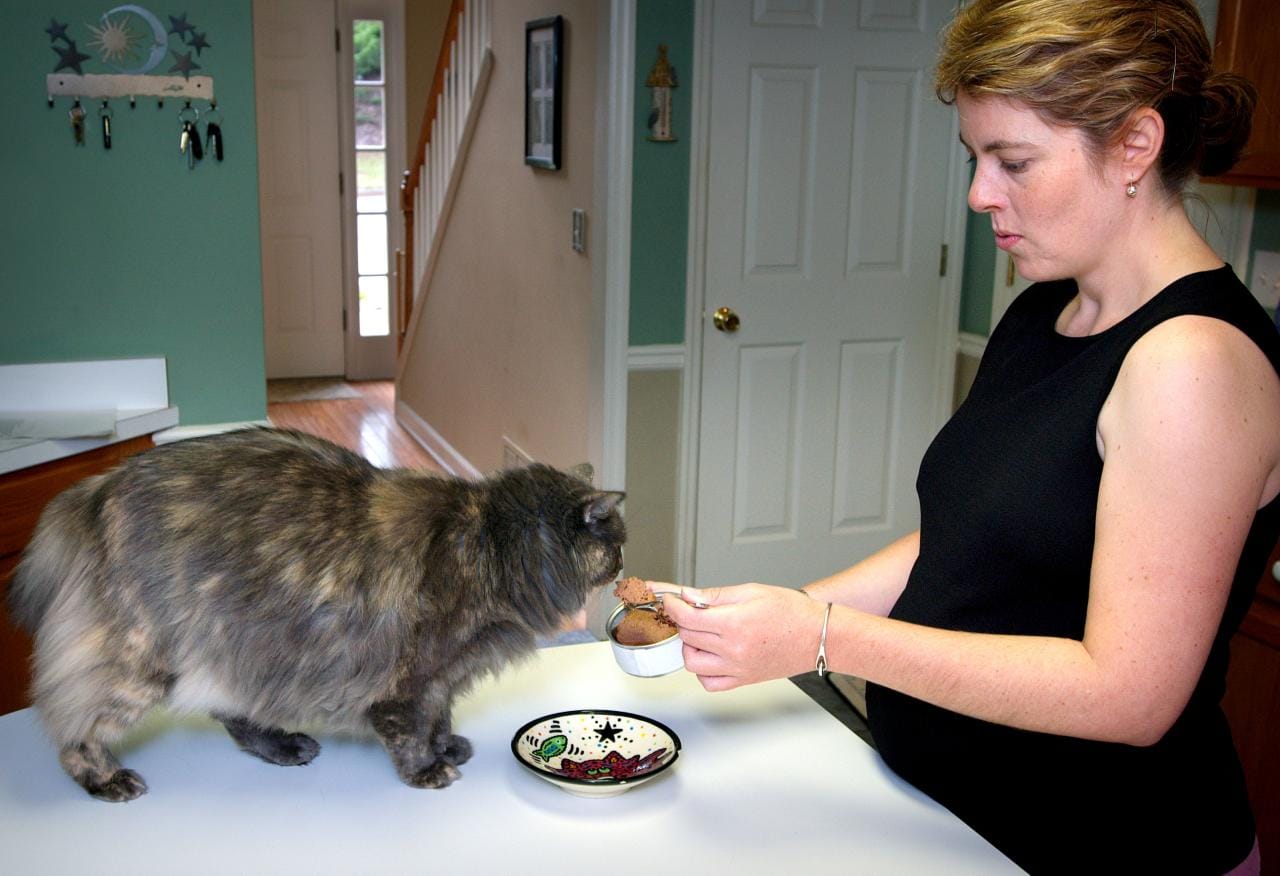
If a pet owner chooses to move forward with a raw diet, health authorities recommend stringent protocols to minimize the risks:
A. Safety and Hygiene Protocols
The utmost priority must be preventing zoonotic disease transmission.
A. Cold Chain Management: Purchase frozen or keep fresh raw ingredients refrigerated at or below $40^{\circ}\text{F}$ ($\approx 4.4^{\circ}\text{C}$) and thaw only in the refrigerator, not on the counter.
B. Strict Sanitation: Use dedicated cutting boards, utensils, and food bowls for the raw food. Wash all surfaces and items that touch the raw meat with hot, soapy water immediately, followed by a disinfectant (e.g., a mild bleach solution).
C. Handwashing: Thorough handwashing (for at least 20 seconds) with soap and warm water is mandatory after handling the food, the pet, or cleaning up pet feces.
D. Waste Disposal: Promptly dispose of uneaten food and ensure that pet feces are collected quickly, especially from areas where children or immunocompromised individuals frequent.
B. Nutritional Guidance and Supplementation
A. Professional Consultation: Never attempt a home-prepared raw diet without a recipe formulated by a DACVN. Generic online recipes are not tailored to individual pet needs (age, life stage, activity level, health conditions).
B. Balanced Ingredients: Ensure the diet includes appropriate organ meat and edible bone or a calcium/phosphorus supplement that mirrors the natural ratio of whole prey.
C. Essential Additives: Supplementation for key nutrients like taurine (especially for cats), Vitamin E (as an antioxidant due to the high fat content), and Vitamin D is often necessary, even in commercial products, depending on the formulation.
C. Veterinary Oversight and Monitoring
A. Regular Health Checks: Ensure your pet receives regular check-ups, including blood work (complete blood count and serum biochemistry panel) every 6-12 months to monitor for potential nutritional deficiencies (e.g., low B12, abnormal liver enzymes, or calcium imbalance).
B. Dental Examinations: Regular veterinary dental checks are crucial to catch and address potential tooth slab fractures early.
C. Avoid Vulnerable Pets: Raw diets should generally be avoided for:
A. Puppies and Kittens: Due to the extremely high risk of growth plate and bone deformities from calcium/phosphorus imbalance.
B. Pets on Immunosuppressive Drugs: Due to their heightened vulnerability to bacterial infection.
C. Pets with Pre-existing Conditions: Especially those with kidney disease or cancer, where specific dietary controls are often paramount.
Conclusion
The raw pet food diet controversy will continue to divide the pet community until more definitive, long-term scientific evidence emerges. The debate pits the philosophical argument of “ancestral appropriateness” against the pragmatic, evidence-based risks of bacterial contamination and nutritional deficiency.
The veterinary consensus leans heavily against raw feeding due to the confirmed, measurable public health and safety risks. However, the anecdotal success stories of reduced allergies and improved energy cannot be entirely dismissed. Ultimately, the decision to feed a raw diet is a significant one that shifts the burden of food safety and nutritional completeness from the commercial manufacturer to the pet owner.
If an owner chooses this path, it must be approached with extreme caution, guided by the gold standard of nutritional science—a board-certified veterinary nutritionist—and executed with rigorous food hygiene practices to safeguard the health of both the animal and the household. The health and longevity of the beloved pet must always remain the priority, irrespective of current trends or passionately held beliefs.